NBI Clearance vs Police Clearance: What’s the Difference?
If you’re in the Philippines or planning to live, work, or travel abroad, you’ve probably heard of both NBI Clearance and Police Clearance. A lot of people mix them up, but they’re not exactly the same. I’ll explain the differences in a simple, friendly way so you know which one you need and when.
What Is NBI Clearance?
NBI Clearance is a background check document issued by the National Bureau of Investigation (NBI), a national government agency. It shows whether you have any criminal record anywhere in the Philippines. In other words, it checks your criminal history across the entire country.
People usually need an NBI Clearance for things like:
Because it looks at records nationwide, it’s often considered more comprehensive and widely accepted both locally and internationally.
What Is Police Clearance?
Police Clearance is issued by the Philippine National Police (PNP). Historically, this document showed whether you have a criminal record in the city, municipality, or local area where you applied. That means it used to be more local in scope.
With improvements like the National Police Clearance System, the coverage is now more unified, but police clearance still focuses on local police records, whereas NBI Clearance looks at national records.
Police Clearance is often used for:
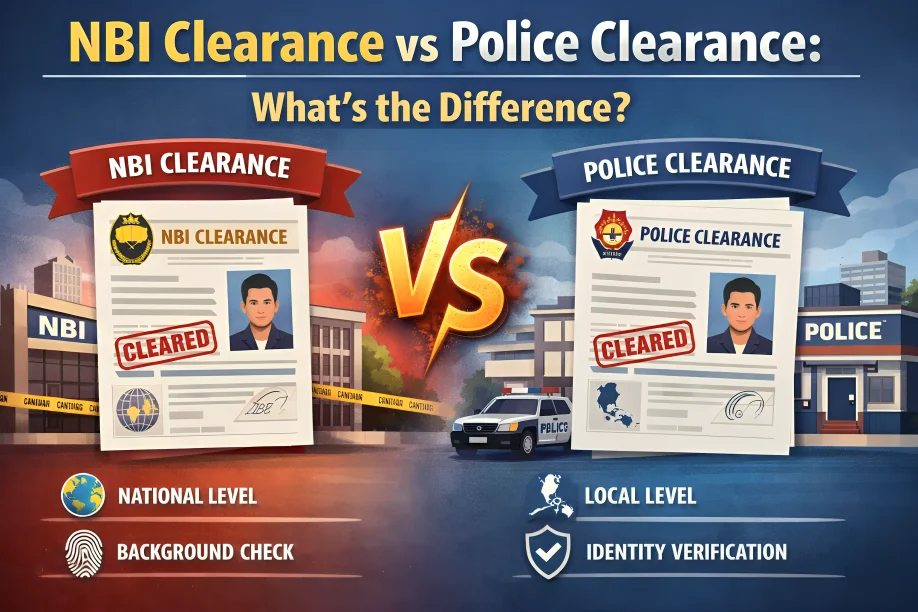
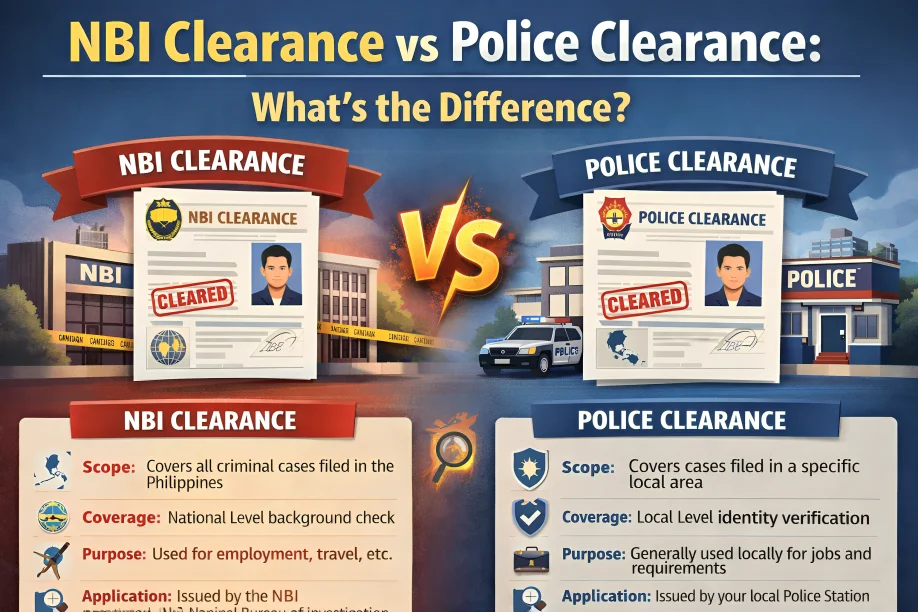
Main Differences Between NBI and Police Clearance
Here’s a clear breakdown of the differences:
Who Issues Them
NBI Clearance: Issued by the National Bureau of Investigation.
Police Clearance: Issued by the Philippine National Police.
Scope of Check
NBI Clearance: Checks nationwide records, so it’s more thorough.
Police Clearance: Mainly checks local or regional records, or records accessible by PNP.
When You Need Each
NBI Clearance: Required for visas, overseas work, formal government jobs, and many official transactions. It’s usually the go‑to document for international applications.
Police Clearance: Often used for local purposes, like small jobs, city requirements, or barangay and local permits. It’s quicker and simpler for community‑level paperwork.
Processing Differences
NBI Clearance: You book an appointment online, pay the fee, and go to an NBI office for biometrics and verification.
Police Clearance: You usually apply directly at your local PNP station (many places now use an online system too). Often, you get it on the same day if there are no issues.
you can also know about: NBI Clearance Validity Period (2026 Update)
Which One Do You Really Need?
Here’s a quick guide to help you choose:
You’re applying for work abroad
You need it for a visa or immigration process
The government or an international organization asked specifically for it
You just need proof of no criminal record for local jobs
You’re applying for a barangay or municipal requirement
You need something quick for community‑level paperwork
A common mistake is assuming one can always replace the other. Some institutions (especially foreign embassies or immigration authorities) specifically require NBI Clearance and will not accept Police Clearance alone.
Tips So You Don’t Get Confused
FAQ’s
Final Words
Understanding the difference between NBI Clearance and Police Clearance is essential so you can get the right document for your needs. NBI is more comprehensive and better for official, national, or international purposes, while Police Clearance is often all you need for local applications.
If you ever get confused about which clearance to apply for, check the requirements of the institution or government body you’re dealing with — and if needed, apply for both!


